
How Can Manufacturing ERP Software Help You?
From Complexity to Control: How Epicor ERP Software Powers Smarter Manufacturing
Manufacturing today is more demanding than ever. Business owners and operations leaders are expected to deliver faster turnaround times, control costs, manage complex supply chains, and still maintain consistent product quality. All of this happens while dealing with labor shortages, fluctuating raw material prices, and increasing customer expectations.
Many manufacturers try to keep up using spreadsheets, disconnected systems, or manual processes—until growth makes that approach unsustainable.
This is why ERP software has become essential for modern manufacturers.
In this guide, we’ll break down what ERP software for manufacturing is, how it works, its key benefits, and why so many manufacturers trust Epicor ERP as their long-term business platform—especially if they’re adopting ERP for the first time.

ERP for Manufacturing, Explained
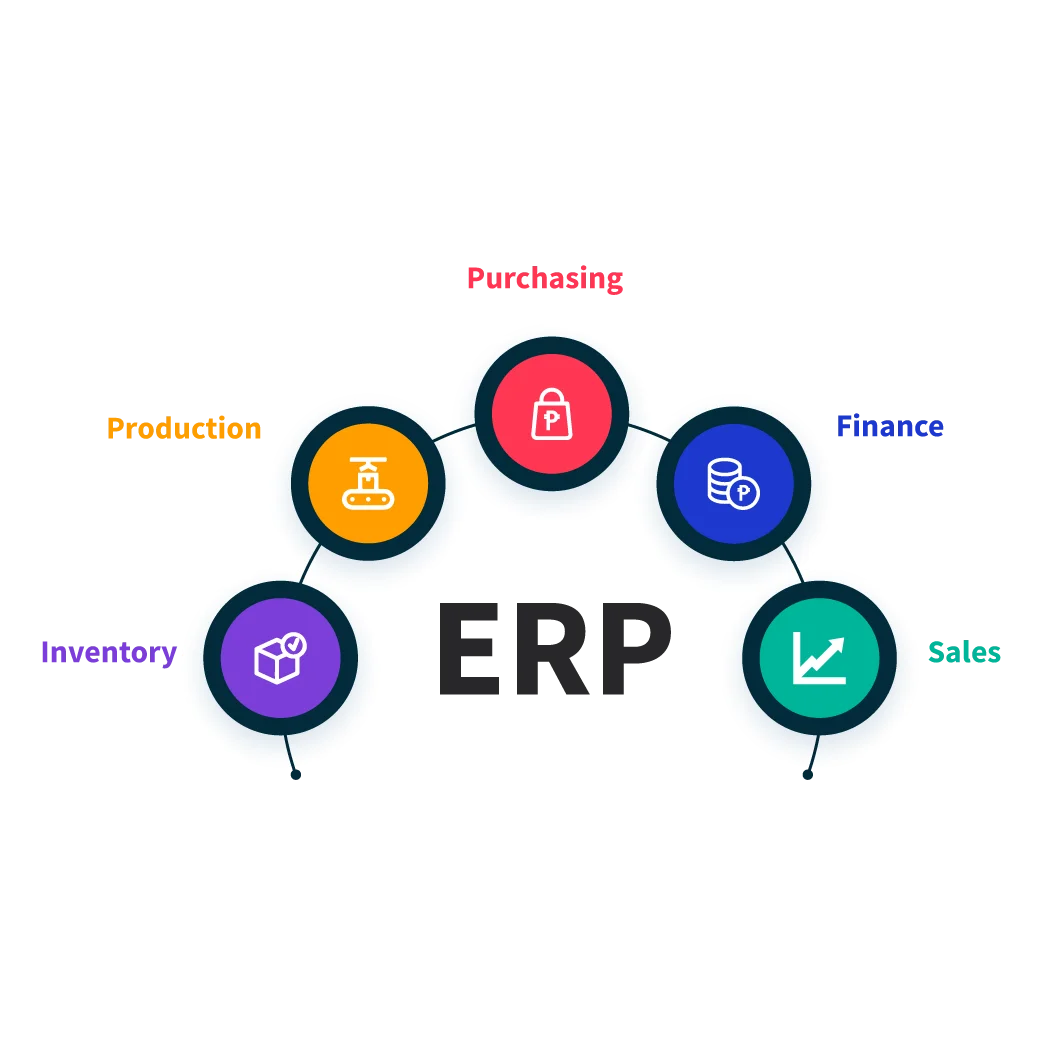
ERP (Enterprise Resource Planning) software is a centralized system that integrates all core manufacturing processes into a single platform.
Instead of managing separate systems for inventory, production, purchasing, finance, and sales, ERP brings everything together—so your teams are always working from the same data.
How ERP Supports Manufacturing Operations
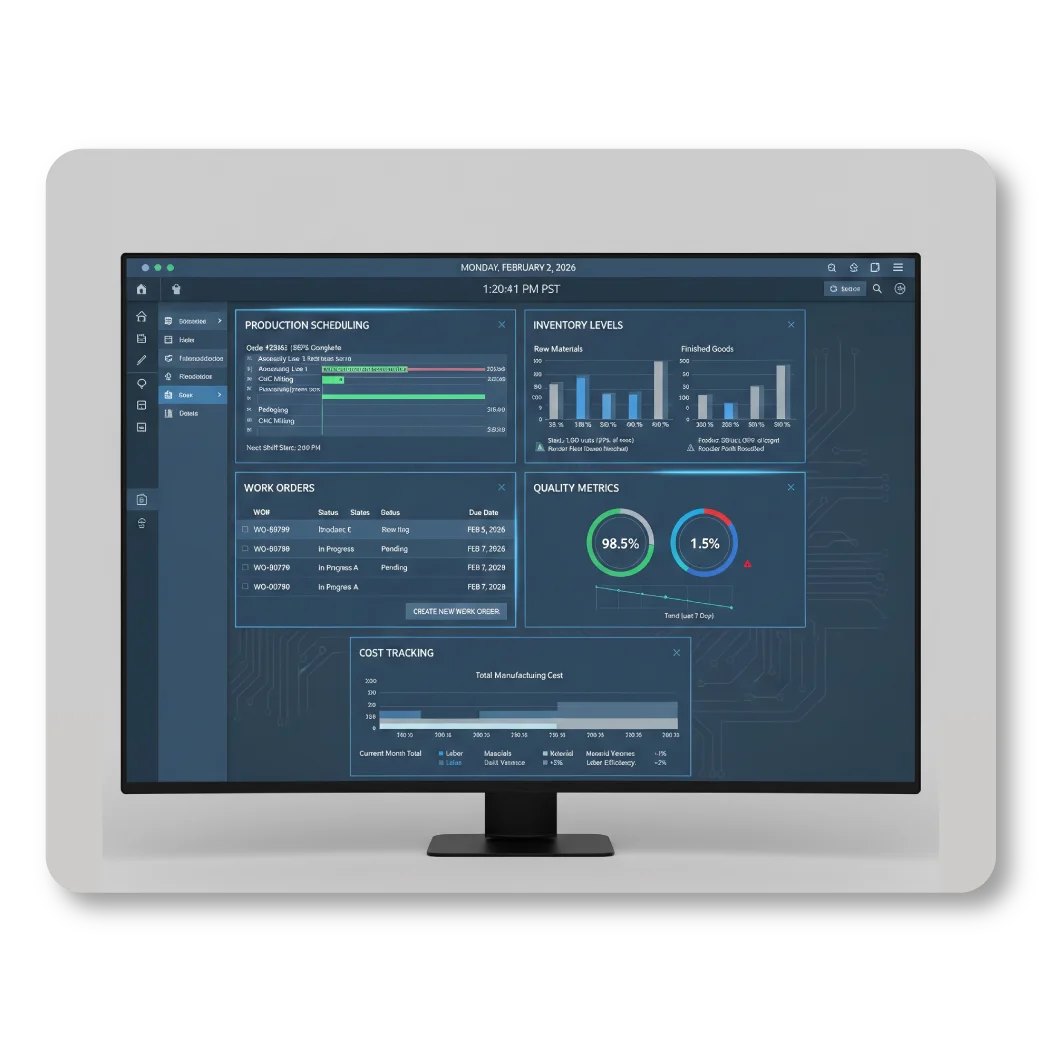
Manufacturing ERP is purpose-built to handle the complexities of production environments, including:
- Bills of Materials (BOMs)
- Work orders and routings
- Inventory and warehouse management
- Production scheduling
- Quality and compliance tracking
- Financial planning and costing
The Role of ERP in Modern Manufacturing
Manufacturers today are under constant pressure to work more efficiently, get more done with fewer resources, and keep up with the market. Falling behind on efficiency often means missed deadlines, rising costs, unhappy customers, and limited growth.
ERP software helps manufacturers:
- Replace disconnected tools with one unified system
- Improve visibility across departments
- Make decisions faster using real, up-to-date information
- Set up systems that can support the business as it grows
Simply put, ERP allows you to run your manufacturing business proactively instead of reactively.
Using ERP to Manage Common Manufacturing Situations
ERP manufacturing software integrates these processes into one single source of truth, giving leaders and teams real-time visibility across the entire operation.
A relatable scenario:
A customer places a rush order. With ERP:
- Sales instantly sees available inventory
- Production checks machine capacity
- Purchasing is alerted if materials are short
- Finance sees cost and margin impact
All departments move in sync—without emails, phone calls, or manual reconciliation.


Key Features and Functionalities of Epicor Manufacturing ERP Software
Modern ERP systems go far beyond basic business management. Solutions like Epicor, include advanced tools designed specifically for manufacturers.
Production Planning and Scheduling
Epicor’s AI-powered ERP automates production scheduling by optimizing:
- Labor availability
- Machine capacity
- Material readiness
By leveraging an ERP system, an automotive parts manufacturer can shift production timelines based on the availability of steel, electronics, or rubber, avoiding costly downtime. With capacity planning tools, a plant manager can see exactly what the production floor can handle, ensuring output meets demand without overloading machines or staff.

Real-Time Data and Analytics
Manufacturing generates massive amounts of data. ERP transforms that data into clear, actionable insights. With real-time dashboards and analytics, manufacturers can:
- Identify production bottlenecks
- Monitor efficiency and output
- Track KPIs as they happen
Through predictive analytics, teams can spot upcoming supply gaps, quality problems, or machinery issues early—enabling proactive solutions before they disrupt operations.
Supply Chain Visibility and Supplier Collaboration
Epicor ERP integrates advanced tools for:
- Materials Requirements Planning (MRP II)
- Forecasting and demand planning
- Scheduling and procurement
Manufacturers can adjust purchasing strategies when raw material costs change, suppliers run into delays, or demand shifts unexpectedly.
They can stay connected with suppliers in real time using digital collaboration tools that make it easier to coordinate production plans, preventing late schedules or delivery discrepancies.
Inventory Management and Control
Inventory control is one of the biggest challenges for manufacturers—and one of the biggest wins with ERP.
Epicor enables real-time tracking of:
- Raw materials
- Work-in-progress (WIP)
- Finished goods
For instance, a food and beverage company needs to track batches, storage conditions, and expiration dates to ensure quality and safety. Mobile devices and barcode scanners let staff update this information right on the floor, reducing errors and keeping data accurate across the plant.
Predictive Maintenance and Smart Manufacturing
Epicor’s AI-powered predictive maintenance tools help manufacturers:
- Monitor machine health via Epicor’s Advanced MES (Manufacturing Execution System) which captures data directly from machines and sensors
- Schedule maintenance based on usage patterns
- Prevent unexpected breakdowns
This reduces unplanned downtime—especially critical during peak production periods.

Benefits of Manufacturing ERP Software
When manufacturers adopt ERP, the benefits quickly extend across the entire organization.
Improved Efficiency and Productivity
ERP eliminates redundant tasks and manual processes, freeing teams to focus on higher-value work.
Better Inventory and Cash Flow Control
With precise inventory tracking, you can avoid excess stock or shortages, which saves money and keeps production on track.
Accurate Costing and Profitability
ERP monitors every cost—materials, labor, and overhead—as it happens, helping manufacturers make smarter pricing decisions and understand their real margins.
Enhanced Collaboration
With everyone working from the same system, communication improves across departments and locations.
Benefits of Cloud ERP for Manufacturers
Cloud-based ERP solutions like Epicor offer additional advantages:
Scalability and Flexibility
Cloud ERP grows with your business—without costly infrastructure upgrades.
Cost-Effectiveness
Saving on setup and IT upkeep lets you focus resources on the things that help your business grow.
Enhanced Security and Reliability
Epicor cloud solutions include advanced security, compliance frameworks, and disaster recovery options—minimizing downtime during unexpected events.


Choosing the Right ERP for Your Business
Selecting the right ERP system is a major decision. Focus on these key factors:
Designed for Manufacturing
Choose an ERP built specifically for manufacturing. It should handle shop floor tracking, production scheduling, quality checks, and compliance, while adapting to common challenges like machine downtime or changing customer orders. By choosing a system designed for manufacturers, you make it easier for your team to adopt it and actually get value out of it—rather than trying to force a generic solution to fit your processes.
Expands With Your Business
Your ERP system should do more than meet your current needs—it should grow with your business. As production volumes increase, new product lines are added, or additional locations are opened, your ERP should handle the extra data, users, and processes without slowing down. Choosing a scalable system means you won’t have to replace or heavily customize your ERP as your business evolves, saving time, money, and headaches in the long run.
Reliable Vendor Support
Choosing the right ERP software isn’t just about features—it’s also about the people behind it. Look for a vendor that offers strong implementation services, comprehensive training, and ongoing support to ensure your system delivers real results.
For example, Mustard Seed Systems Corporation provides a structured onboarding process that guides you step by step through your Epicor ERP implementation. They offer hands-on, role-specific training so your team can use the system confidently from day one. Plus, dedicated support ensures you have expert guidance whenever questions or challenges arise, helping your business get the most out of your ERP investment over the long term
Which Types of ERP Systems Are Used in Manufacturing?
Epicor supports all three deployment models, allowing manufacturers to choose what works best for their business.
Why Manufacturers Trust Epicor ERP
Epicor has been named a Leader in the 2025 Gartner Magic Quadrant for Cloud ERP for Product-Centric Enterprises for the third consecutive year—recognized for both execution and vision.
It is designed specifically for manufacturers, not adapted from a generic business platform. Its core capabilities reflect real-world manufacturing needs—from production planning to supply chain visibility.
Epicor ERP software is:
Configurable to your workflows
Epicor adapts to how your business already operates, whether you’re make-to-order, make-to-stock, or mixed-mode. Manufacturers can configure processes, roles, and do customizations without heavy coding, helping teams work more efficiently while preserving best practices.
Interoperable with existing systems
Epicor integrates seamlessly with shop-floor equipment, CRM platforms, and third-party applications. This reduces data silos, minimizes manual data entry, and ensures consistent, real-time information across departments.
Future-ready with continuous innovation
With ongoing cloud updates, embedded analytics, and emerging AI-driven capabilities, Epicor helps manufacturers stay competitive without disruptive upgrades.
Unlike generic ERP platforms that require extensive customization to support manufacturing operations, Epicor delivers manufacturing-ready capabilities out of the box, reducing implementation time, cost, and risk.
Manufacturers moving from platforms like NetSuite, Sage, or SAP often choose Epicor because it is built around manufacturing processes, terminology, and compliance requirements, making it easier for teams to adopt and use effectively.
With Epicor, manufacturers gain more than software—they gain a partner focused on long-term success.
